Friday, April 9, 2021

From Protestant John Bunyan to Woke Tom Walton


Recently, we looked at some of the bad consequences that flow out from the Roman Catholic teachings on Christ’s descent into Hades.

Now we must look at the other main faction of the post-Orthodox West, Protestantism, and some of the tares it has sown.  More specifically, how has the West gone from writing Christian allegories like Pilgrim’s Progress in the wake of the Protestant Reformation to atheistic/Marxist Woke babbling that seeks to destroy anything remotely Christian?  It is because they exist on the same line of continuum; they have the same root.

Mr Paul Krause helps illustrate this.  At the end of his essay on Pilgrim’s Progress, he writes,


Let us return to this theology of calling which Bunyan takes from Sacred Scripture and rewrites for us in the similitude of a dream. Bunyan, as we know, was a radical nonconformist. He was also a devout Calvinist. Christian’s call out of the City of Destruction is Bunyan’s esoteric message for “Christians” inside the Restoration Church of England to come out of the city fitted for destruction. The Restoration Church of England is Formalist, Hypocritical, and Ignorant of the true faith which Bunyan has expounded for us in his allegorical pilgrimage.


Bunyan is warning his fellow readers that to remain in the formalist, ignorant, talkative Restoration Church is to consign oneself to condemnation. Like Christian, who is imprisoned in Vanity-Fair, Bunyan was imprisoned during the Restoration. The life of Christian mirrors the life of Bunyan. Bunyan was originally an idealist, a man who fought in the revolution and favored an initial cleansing of the Church of England. But is this what God called his People to do in the Bible? Sure, there is the Commission to preach and baptize and teach—but the weight of Scriptural theology is a calling out.


As mentioned, Abraham is called out of Ur of the Chaldees. Lot is called out of Sodom and Gomorrah. The Israelites are called out of Egypt. St. Paul teaches that the hope of Christians is to be called out of the earthly Jerusalem and ascend to the heavenly Jerusalem. The Church Fathers, most notably St. Augustine and St. Gregory Nazianzus, also write of this call of the Church out of the world as it pilgrims in this world to the next.


“The Pilgrim’s Progress, then, is a nonconformist text in the wildest sense, as well as in the highly specific context of Restoration Nonconformity.” Indeed it is. John Bunyan’s Pilgrim’s Progress may not be as aesthetically magisterial as Milton’s Paradise Lost. But it is, as I hope we can now see, a Protestant’s book. It contains in its pages the great seismic shift away from institutional idealism and toward a separationist theology which revived the Theology of Calling found in Scripture and the Church Fathers. It is, above all, perhaps the finest work of English nonconformist literature since John Milton and remains unsurpassed more than three centuries later. There is a lot of John Bunyan in The Pilgrim’s Progress, and perhaps that is why it is quintessentially Protestant and timeless.


--https://theimaginativeconservative.org/2021/04/pilgrims-calling-john-bunyan-pilgrims-progress-paul-krause.html

What is noteworthy here is that this description is very much akin to the ancient heresy of Gnosticism - It is radically dualistic, subjective/individualistic, and involves a special divine revelation or calling to a select few to receive ‘salvation’.  (For more on those and on the other marks of Gnosticism, visit https://www.catholicworldreport.com/2021/01/31/the-gnostic-heresys-political-successors/--Via Rod Dreher’s blog at The American Conservative.)

The dualism is so pronounced in Misters Bunyan and Krause that even the visible Church is irredeemably tainted by evil.  But those solitary individuals whom God has called out are able to see clearly and find the path to the City of God. 

Hence we see the first outlines of our modern Elite, who likewise believe they are ‘chosen’, having access to a secret, exalted knowledge with which they can escape the futility of the present corrupt world and gain entry to Paradise (or in the modern sense, create it themselves).

Hence we have the Tom Walton’s of the world (the grandson of Walmart founder Sam Walton), the corporate Titans, with their efforts to make a utopia where transgender people have all the same ‘rights’ as everyone else:


“We are alarmed by the string of policy targeting LGBTQ people in Arkansas. This trend is harmful and sends the wrong message to those willing to invest in or visit our state. We support Gov. Asa Hutchinson’s recent veto of discriminatory policy and implore government, business and community leaders to consider the impact of existing and future policy that limits basic freedoms and does not promote inclusiveness in our communities and economy.


Our nation was built on inalienable rights and strengthened by individual differences. Arkansas has been called the land of opportunity because it is a place where anyone can think big and achieve the extraordinary. Any policy that limits individual opportunity also limits our state’s potential.”


--Heath Higgs, https://www.fox16.com/news/politics/walton-family-foundation-issues-statement-on-arkansas-anti-trans-legislation/, via https://www.ozarksfirst.com/local-news/arkansas-general-assembly-votes-to-override-veto-on-transgender-youth-treatment-ban/

In simpler terms, then, the modern Woke Elite are simply the old Protestant Reformers who have shed the Christian elements that masked the latter’s Gnostic belief system.

But Christianity (i.e., the Orthodox Church) is not simply a gathering of like-minded individuals seeking escape from a hopelessly evil world.  It is a real union with the deified flesh of Jesus Christ and with one another, Whose Grace ripples out into the world through His Body’s members, sanctifying it, little by little, that all the cosmos may share in the Life of the All-Holy Trinity.  The individual Christian does not disappear in this union, and yet his subjective judgment of the Church and her creed/doctrines is not the final authority, either:  There is a priestly hierarchy, consecrated by God, to which he must be obedient.  St John of Kronstadt (+1908) offers this beautiful description of the Orthodox Church:


The holy Church is God's most supreme, most holy, most good, most wise and necessary establishment upon the earth. She is "the true tabernacle'' of God, " which the Lord pitched, and not man" (Heb. viii. 2)—not Luther, not Calvin, and not Mohammed, nor Buddha, nor Confucius, nor any other suchlike sinful, passionate person. The Church is a union of people established by God, united among themselves by the Faith, Doctrine, Hierarchy, and Mysteries. She is Christ's spiritual army, equipped with spiritual weaponry against the numberless armed hordes of the devil: "For we wrestle not against flesh and blood, but against principalities, against powers, against the rulers of the darkness of this age, against spiritual wickedness in high places" (Eph. vi. 12). She is a spiritual hospital where mankind, enfeebled by the open wound of sin, is cured by grace-filled treatments given by God—by repentance and communion in the Holy Mysteries of Christ, in Christ's Body and Blood, and by the word of God, by the instructions and counsels and consolations of the shepherds of Christ's rational flock. She is a common laver of purification, rebirth, and sanctification; she is God’s sanctuary in which all are sanctified by the Holy Spirit through Baptism, Chrismation, and the other Mysteries, and the Divine Service. She is the spiritual sun of the world, enlightening and giving 1ife to all who sit in the darkness and shadow of death an who are dead through sin.


--http://orthodoxinfo.com/general/krons_church.aspx

But in reality, the Protestants are only following the path cleared for them by the Roman Catholic Pope, who long ago set the ensample for all in the West to follow vis-à-vis rebellion against the Orthodox Church of the Holy Apostles, the only true Christian mother of the West:


The most harmful thing in Christianity, in this God-revealed, heavenly religion, is the leadership of one man in the Church—for instance, the pope, and his supposed infallibility. It is precisely in the dogma of his infallibility that the greatest mistake is contained, for the pope is a sinful man, and O the disaster if he fancies himself to be infallible! How many great errors, destructive of the souls o men, has the Catholic, papal church thought up—in dogmas, in rites, in canonical rules, in the Divine Services, in the deadly and malicious relations of the Catholics with the Orthodox, in blasphemies and slanders against the Orthodox Church, in revilings directed against the Orthodox Christians! And of all this the professedly infallible pope is guilty, with his and the Jesuits' teaching, their spirit of falsehood, duplicity, and every sort of unrighteous means ad maiorem Dei gloriam (for the—alleged—greater glory of God).


--Ibid.

May the West return swiftly to the Orthodox Faith, through the prayers of the holy God-pleaser, Father John of Kronstadt!


A hatred of Orthodoxy, fanaticism against and persecution of the Orthodox, even killings, run like a crimson thread through all the ages of Catholicism's existence. By their fruits ye shall know them. Was such a spirit commanded to us by Christ? If to anyone, it is always possible to say to Catholics, Lutherans, and Reformed: "Ye know not what manner of spirit ye are of" (Luke ix, 55).


 . . . 


"Receiving the end of your faith, even the salvation of your souls" (I Peter i. 9). Behold the end and goal of the Orthodox Christian faith—the salvation of the soul of every believer. How invaluable is our faith; how holy, true, God-pleasing, powerful, saving! How necessary it is to love Her, worthily to esteem Her, constantly to utilize Her for one's own salvation and that of others. O Lord, save the race of Orthodox Christians, and convert all the non-orthodox to Orthodoxy, as to the one faith which saves, established by Thee, glorified by Thee, and to be eternally glorified by Thee! Thou art holy and righteous—and Thy faith is holy and righteous.


--Ibid.
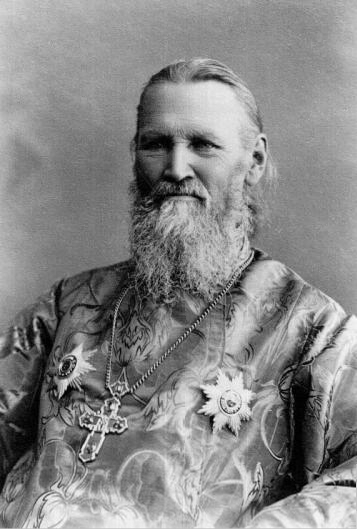
The holy image of St John is via https://orthodoxwiki.org/John_of_Kronstadt .

--

Holy Ælfred the Great, King of England, South Patron, pray for us sinners at the Souð, unworthy though we are!

Anathema to the Union!

Tuesday, April 6, 2021

The Harrowing of Hades


Dr David Arias presents us with another vivid illustration of how the West’s separation from the Orthodox Church has caused her to wander into a barren, lifeless religious land.  He quotes Thomas Aquinas, the famous Roman Catholic theologian, regarding the harrowing of Hades by Christ, in order to explain the significance of this event for humanity.  Here are some highlights from his essay:


When reflecting on our Lord’s harrowing of hell, it is, of course, necessary to distinguish different meanings of the name “hell.” In its most general meaning, “hell” signifies “the underworld,” which the Hebrews refer to as, Sheol, and the Greeks call by the name, Hades (Catechism of the Catholic Church, #633). Further, as the Roman Catechism teaches, there are three main parts to the underworld. There is gehenna, or hell in the strict sense, which is the abode of the damned. There is also purgatory wherein the punishments, unlike those of gehenna, are cleansing and only temporary in character. Lastly, there is that part of the underworld known as “Abraham’s bosom” (see, Luke 16:22-26). It was in here that “the souls of the just prior to the coming of Christ the Lord were received, and where, without experiencing any sort of pain, but supported by the blessed hope of redemption, they enjoyed peaceful repose” (Roman Catechism, pt. 1, art. 5).


So, into which part or parts of hell did Christ descend and why? Taking St. Thomas Aquinas as our guide, we can affirm both that our Lord descended into all three parts of hell and that He descended into only one part of hell (i.e., into Abraham’s bosom).  . . .


 . . . Christ’s soul, through its essence, only entered Abraham’s bosom. Nonetheless, through its effect, Christ’s soul was in some way present in every part of hell. As St. Thomas puts it, “being in one part of hell, his effect in some way spread to every part of hell, just as by suffering in one place on earth, he liberated the whole world by His passion” (Summa Theologiae, III, q. 52, a. 2). More specifically, St. Thomas teaches that the proper effect of Christ in the underworld was the bestowal of the beatific vision on the souls of the just waiting for Him in Abraham’s bosom. This, properly speaking, constitutes the harrowing or despoiling of hell. For, through granting the souls of the just the vision which beatifies, the King of all things “robbed” hell of its most prized possessions. But Christ’s presence in hell also had the effects of giving hope of attaining eternal glory to the souls in purgatory and of confounding and bewildering those in gehenna (Summa Theologiae, III, q. 52, a. 2).


These considerations, in turn, cast some light on the reasons for God the Son’s descent into hell. For one thing, He went there to manifest His power and authority to the underworld. As St. Paul writes, “at Jesus’ name every knee must bend in the heavens, on the earth, and under the earth, and every tongue proclaim to the glory of God the Father: Jesus Christ in Lord!” (Phil. 2:10-11). But secondly, and more importantly, our Lord came to deliver His loved ones from their exile. He came to reward those who, from our first father, Adam, to His own foster-father, St. Joseph, had fought the good fight and had finished the race. The King descended into Hell in order to bring nothing less than His own beatific vision, the very paradise which He promised to Dismas just a few hours before (Lk. 23:43), to these just and holy souls.


 . . .


--https://theimaginativeconservative.org/2021/04/harrowing-of-hell-david-arias.html

One may note how the Roman Catholic view of the harrowing is rather limited in its scope:  Christ went down only to bring the just out of Hades, while for the wicked he gives nothing but vindictive chastisement (most Protestants reject the idea that Christ rescued anyone from Hades, so we will focus on the Roman Catholic teachings).  The Orthodox teaching has a very different focus.  His Grace Bishop Hilarion of Vienna elaborates:


 . . . The doctrine on the descent of Christ into Hades is an integral part of Orthodox soteriology. Its soteriological implications, however, depend in many ways on the way in which we understanding the preaching of Christ in hell and its salutary impact on people[65]. If the preaching was addressed only to the Old Testament righteous, then the soteriological implications of the doctrine is minimal, but if it was addressed to all those in hell, its significance is considerably increased. It seems that we have enough grounds to argue, following the Greek Orthodox theologian, I. Karmiris, that ‘according to the teaching of almost all the Eastern Fathers, the preaching of the Saviour was extended to all without exception and salvation was offered to all the souls who passed away from the beginning of time, whether Jews or Greek, righteous or unrighteous’[66]. At the same time, the preaching of Christ in hell was good and joyful news of deliverance and salvation, not only for the righteous but also the unrighteous. It was not the preaching ‘to condemn for unbelief and wickedness’, as it seemed to Thomas Aquinas. The entire text of the First Letter of St. Peter relating to the preaching of Christ in hell speaks against its understanding in terms of accusation and damnation’[67].


Whether all or only some responded to the call of Christ and were delivered from hell remains an open question. If we accept the point of view of those Western church writers who maintain that Christ delivered from hell only the Old Testament righteous, then Christ’s salutary action is reduced merely to the restoration of justice. The Old Testament righteous suffered in hell undeservedly, not for their personal sins but because of the general sinfulness of human nature and because their deliverance from hell was a ‘duty’ which God was obliged to undertake with respect to them. But such an act could scarcely constitute a miracle that made the angels tremble or one to be praised in church hymns.


Unlike the West, Christian consciousness in the East admits the opportunity to be saved not only for those who believe during their lifetime, but also those who were not given to believe yet pleased God with their good works. The idea that salvation was not only for those who in life confessed the right faith, not only for the Old Testament righteous, but also those heathens who distinguished themselves by a lofty morality, is developed in one of the hymns of John Damascene:


Some say that [Christ delivered from hell] only those who believed[68], such as fathers and prophets, judges and together with them kings, local rulers and some others from the Hebrew people, not numerous and known to all. But we shall reply to those who think so that there is nothing undeserved, nothing miraculous and nothing strange in that Christ should save those who believed[69], for He remains only the fair Judge, and every one who believes in Him will not perish. So they all ought to have been saved and delivered from the bonds of hell by the descent of God and Master - that same happened by His Disposition. Whereas those who were saved only through [God’s] love of men were, as I think, all those who had the purest life and did all kinds of good works, living in modesty, temperance and virtue, but the pure and divine faith they did not conceive because they were no instructed in it and remained altogether unlearnt. They were those whom the Steward and Master of all drew, captured in the divine nets and persuaded to believe in Him, illuminating them with the divine rays and showing them the true light[70].


This approach renders the descent into Hades exceptional in its soteriological implications. According to Damascene, those who were not taught the true faith during their lifetime can come to believe when in hell. By their good works, abstention and chastity they prepared themselves for the encounter with Christ. These are that same people about whom St. Paul says that having no law they ‘do by nature things contained in the law’, for ‘the work of the law is written in their hearts’[71]. Those who live by the law of natural morality but do not share the true faith can hope by virtue of their righteousness that in a face-to-face encounter with God they will recognize in Him the One they ‘ignorantly worshipped’[72].


Has this anything to do with those who died outside Christian faith after the descent of Christ into Hades? No, if we accept the Western teaching that the descent into Hades was a ‘one-time’ event and that the recollection of Christ did not survive in hell. Yes, if we proceed from the assumption that after Christ hell was no longer like the Old Testament sheol, but it became a place of the divine presence. In addition, as Archpriest Serge Bulgakov writes, ‘all events in the life of Christ, which happen in time, have timeless, abiding significance. Therefore, the so-called ‘preaching in hell’, which is the faith of the Church, is a revelation of Christ to those who in their earthly life could not see or know Christ. There are no grounds for limiting this event… to the Old Testament saints alone, as Catholic theology does. Rather, the power of this preaching should be extended to all time for those who during their life on earth did not and could not know Christ but meet Him in the afterlife[73]. According to the teaching of the Orthodox Church, all the dead, whether believers or non-believers, appear before God. Therefore, even for those who did not believe during their lifetime, there is hope that they will recognize God as their Saviour and Redeemer if their previous life on earth led them to this recognition.


 . . .


--https://stjamesorthodox.org/files/articles/Bishop-Hilarion---Christ-the-Conqueror-of-Hades.pdf

Such is the expansive view of the Orthodox Church.  It is no great wonder, then, that as the West has moved away from it, atheism/indifference to Christianity has been steadily growing since Roman Catholics and Protestants have so greatly limited the scope and action of God’s Love, declaring that only certain categories of men will be saved:


The general conclusion can now be drawn from a comparative analysis of Eastern and Western understandings of the descent into Hades. In the first three centuries of the Christian Church, there was considerable similarity between the interpretation of this doctrine by theologians in East and West. However, already by the 4th-5th centuries, substantial differences can be identified. In the West, a juridical understanding of the doctrine prevailed. It gave increasingly more weight to notions of predestination (Christ delivered from hell those who were predestined for salvation from the beginning) and original sin (salvation given by Christ was deliverance from the general original sin, not from the ‘personal’ sins of individuals). The range of those to whom the saving action of the descent into hell is extended becomes ever more narrow. First, it excludes sinners doomed to eternal torment, then those in purgatory and finally unbaptised infants. This kind of legalism was alien to the Orthodox East, where the descent into Hades continued to be perceived in the spirit in which it is expressed in the liturgical texts of Good Friday and Easter, i.e. as an event significant not only for all people, but also for the entire cosmos, for all created life.


At the same time, both Eastern and Western traditions suggest that Christ delivered from hell the Old Testament righteous led by Adam. Yet if in the West this is perceived restrictively (Christ delivered only the Old Testament righteous, while leaving all the rest in hell to eternal torment), in the East, Adam is viewed as a symbol of the entire human race leading humanity redeemed by Christ (those who followed Christ were first the Old Testament righteous led by Adam and then the rest who responded to the preaching of Christ in hell).


--Ibid.

And also,


The doctrine of the descent of Christ into Hades is important for an understanding of God’s action in human history, as reflected in the Old Testament. The biblical account of the flood, which destroyed all humanity, is a stumbling block for many who wish to believe in a merciful God but cannot reconcile themselves with a God who ‘repents’ of his own deed. The teaching on the descent into hell, as set forth in 1 Pet. 3:18-21, however, brings an entirely new perspective into our understanding of the mystery of salvation. It turns out that the death sentence passed by God to interrupt human life does not mean that human beings are deprived of hope for salvation, because, failing to turn to God during their lifetime, people could turn to Him in the afterlife having heard Christ’s preaching in the prison of hell. While committing those He created to death, God did not destroy them, but merely transferred them to a different state in which they could hear the preaching of Christ, to believe and to follow Him.


--Ibid.

‘The death of the West’ is a popular topic of discussion, and rightly so since it is a phenomenon sadly unfolding right before us.  But the cause is known - her being sundered from the Orthodox Church, in which the Grace of God abides.  And therefore the cure is likewise known - the reunion of the West with that same Church, which is nothing less than the crucified, risen, glorified, and ascended Body of the God-man, the Lord Jesus Christ.  Will the pride of the West for her post-Great Schism ‘civilization’ keep her from reuniting with that which will give her life?


The holy icon of the Harrowing of Hades is from https://www.orthodoxroad.com/christs-descent-into-hell-icon-explanation/ .  An explanation of this icon is on the same page.

--

Holy Ælfred the Great, King of England, South Patron, pray for us sinners at the Souð, unworthy though we are!

Anathema to the Union!

Monday, April 5, 2021

Offsite Post: ‘A Chance for Redemption in Georgia’


Georgia is coming under a withering attack from Woke corporations and politicians for her efforts to strengthen the integrity of her State’s voting system.  To name a few:

Coca-Cola

Joe Biden and Major League Baseball

Viacom-CBS

The giant investment firm BlackRock

Delta Airlines

A host of black business leaders

Rod Dreher has the right mindset toward this sort of thing:


To sum up the reader’s critique, voting Republican is not enough. Conservatives, in his view, have to vote for Republicans who are willing to take on Woke Capital and other left-captured institutions, even the US military — and not just take them on symbolically, but really make them pay a price.


 . . .


Leaving aside the merits or demerits of the Georgia law, this is once again Big Business throwing its weight around on legislation that has nothing to do with it. This is what they did in 2015, with the Indiana Religious Freedom Restoration Act, bullying state lawmakers into repealing it. Whether or not the new Georgia law is good or bad, I resent the hell out of corporations pushing the state around like that. It is long past time for conservative voters to wake up and realize that Big Business is not our friend, and is in some cases our enemy.

Some State lawmakers in Georgia seem to be in agreement with his general idea:


Georgia's Republican-controlled House on Wednesday voted to revoke a major tax break for Delta Air Lines as punishment for its CEO's public criticism of the state's controversial new law clamping down on ballot access.


The state Senate did not take up the measure before lawmakers adjourned for the year, rendering it dead for this year -- but the threat underscores the potential political backlash corporations could face for opposing efforts to restrict voting.


--Fredreka Schouten, CNN

Did you catch that?  Heavy financial weaponry is being aimed right at the heart of Georgia, but State lawmakers there went home without doing anything about it.  That is negligence bordering on treason.

Perceptive Southerners, both before and after The War, have mistrusted large corporations.  The Nashville Agrarians, writing in 1930, went so far as to proclaim them the means by which communism would gain a strong foothold here in the States (I’ll Take My Stand, LSU Press, Baton Rouge, La., 2006, p. xlv-xlvi).  Events are proving them right.

 . . .

The rest is at https://thehayride.com/2021/04/garlington-a-chance-for-redemption-in-georgia/ .

--

Holy Ælfred the Great, King of England, South Patron, pray for us sinners at the Souð, unworthy though we are!

Anathema to the Union!